

The scope of identity theft
According to the Aite Group, 47 percent of Americans experienced financial identity theft in 2020. The group’s report, U.S. Identity Theft: The Stark Reality, found that losses from identity theft cases cost $502.5 billion in 2019 and increased 42 percent to $712.4 billion in 2020. The group explains that the huge increase was fueled by the high rate of unemployment identity theft during the pandemic, as increased and extended unemployment benefits made the sector an attractive target for fraudsters.
Losses are forecast to increase again in 2021 to $721.3 billion. The study narrowed the identity theft definition to include only application fraud, where criminals used a victim’s identity to open a new account of some type and account takeover, where an account is taken so criminals can steal money or access rewards. Examples of accounts include rewards accounts for airlines, hotels, or merchants; insurance policies; and other accounts.
In the past two years, 37 percent of consumers have been victims of application fraud and 38 percent experienced account takeovers. The highest percentage of consumers who were victimized in 2020 were between 35 and 44 years of age and accounted for 30 percent of all identity theft victims. The findings are from an online survey conducted in December 2020 of 8,653 U.S. consumers age 18 and older.
Identity theft and fraud complaints
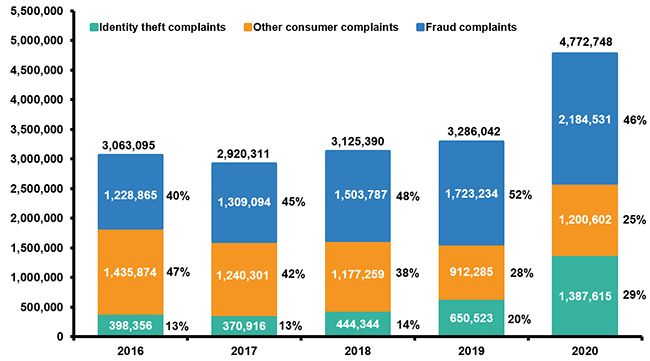
The Consumer Sentinel Network, maintained by the Federal Trade Commission (FTC), tracks consumer fraud and identity theft complaints that have been filed with federal, state and local law enforcement agencies and private organizations. There were 4.8 million identity theft and fraud reports received by the FTC in 2020, up 45 percent from 3.3 million in 2019, mostly due to the 113 percent increase in identity theft complaints. In 2020, 1.4 million complaints were for identity theft, up from 651,000 in 2019. Identity theft complaints accounted for 29 percent of all complaints received by the FTC, up from 20 percent in 2019. About 2.2 million reports were fraud complaints and 1.2 million involved other complaints.
Out of the total 4.8 million reports received by the FTC in 2020, the most by category were for identity theft complaints. Within identity theft, almost one-third were for scams involving government benefits applied for or received. According to Equifax, federal stimulus payments were an easy target for criminals and were the number one COVID-19 scam. New credit card accounts fraud was the next largest identity theft scam, about 30 percent of all identity theft complaints. Imposter scams were the second-worst overall category of FTC complaints, with almost one-half million reports.
Of the 2.2 million fraud cases, 34 percent reported money was lost. Consumers reported losing more than $3.3 billion related to fraud complaints, an increase of $1.5 billion from 2019. The median amount consumers paid in these cases was $311. Twenty-two percent of imposter scams reported money lost, totaling about $1.2 billion.
The top five states for identity theft ranked by the number of reports per population were Kansas, Rhode Island, Illinois, Nevada and Washington. (See chart below). For fraud and other complaints, the top five states were Nevada, Delaware, Florida, Maryland, and Georgia.
Identity Theft And Fraud Reports, 2016-2020 (1)



0 Comments